How is Uzbekistan Shaping a New Reality in the Geopolitics of Transport Corridors in Central Asia?
Recent Articles
Author: Nargiza Umarova
04/03/2026
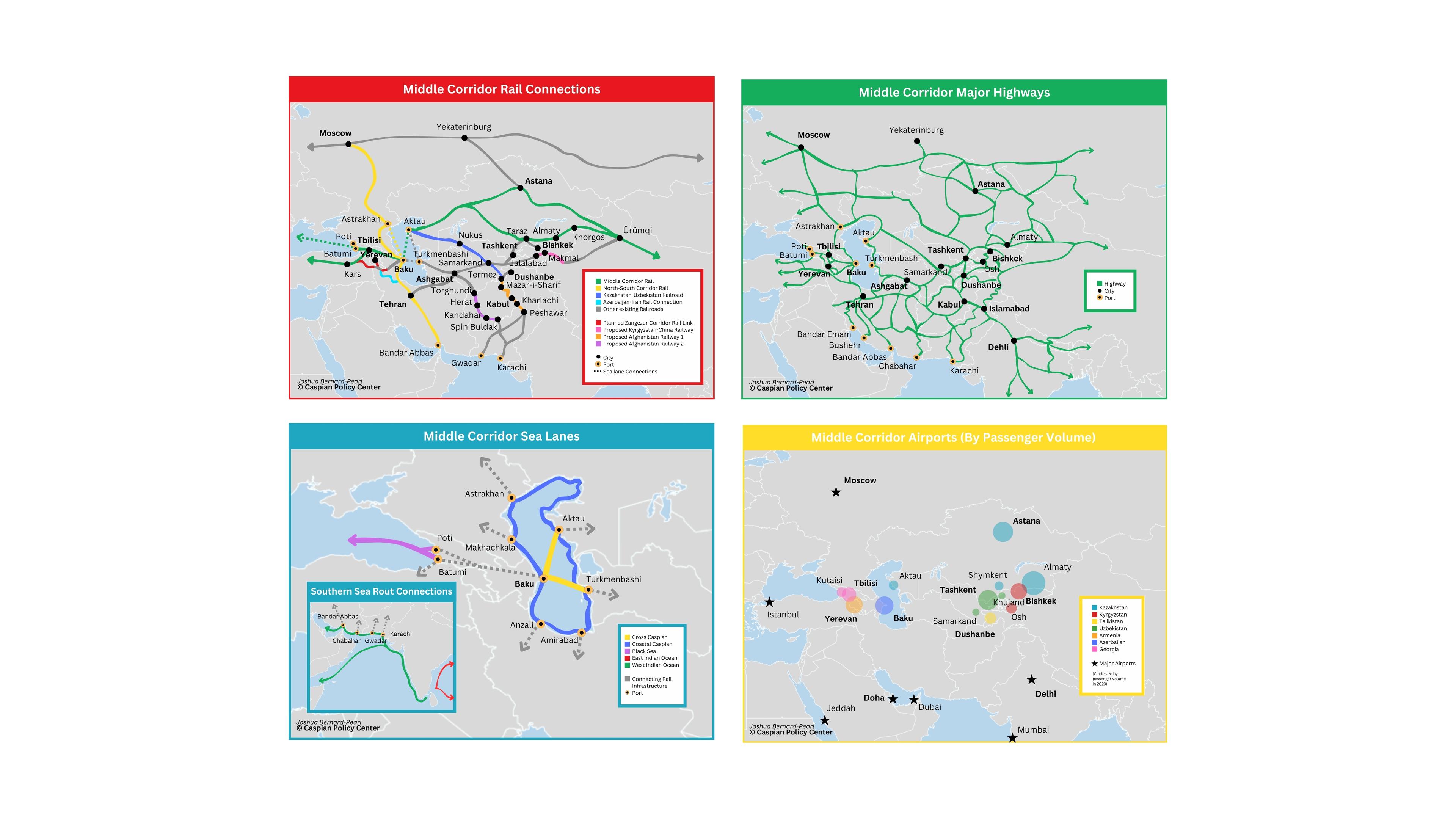
In a recent move to diversify foreign trade flows, Uzbekistan is rapidly expanding freight transport via the Caspian Sea. Making this development practicable is the effective use of Turkmenistan’s railway and port infrastructure. Thanks to this aggressive expansion, the Caspian port of Turkmenbashi handled one million tons of Uzbek cargo in 2025, accounting for 83 percent of the country’s total cargo turnover along the southern branch of the Middle Corridor.
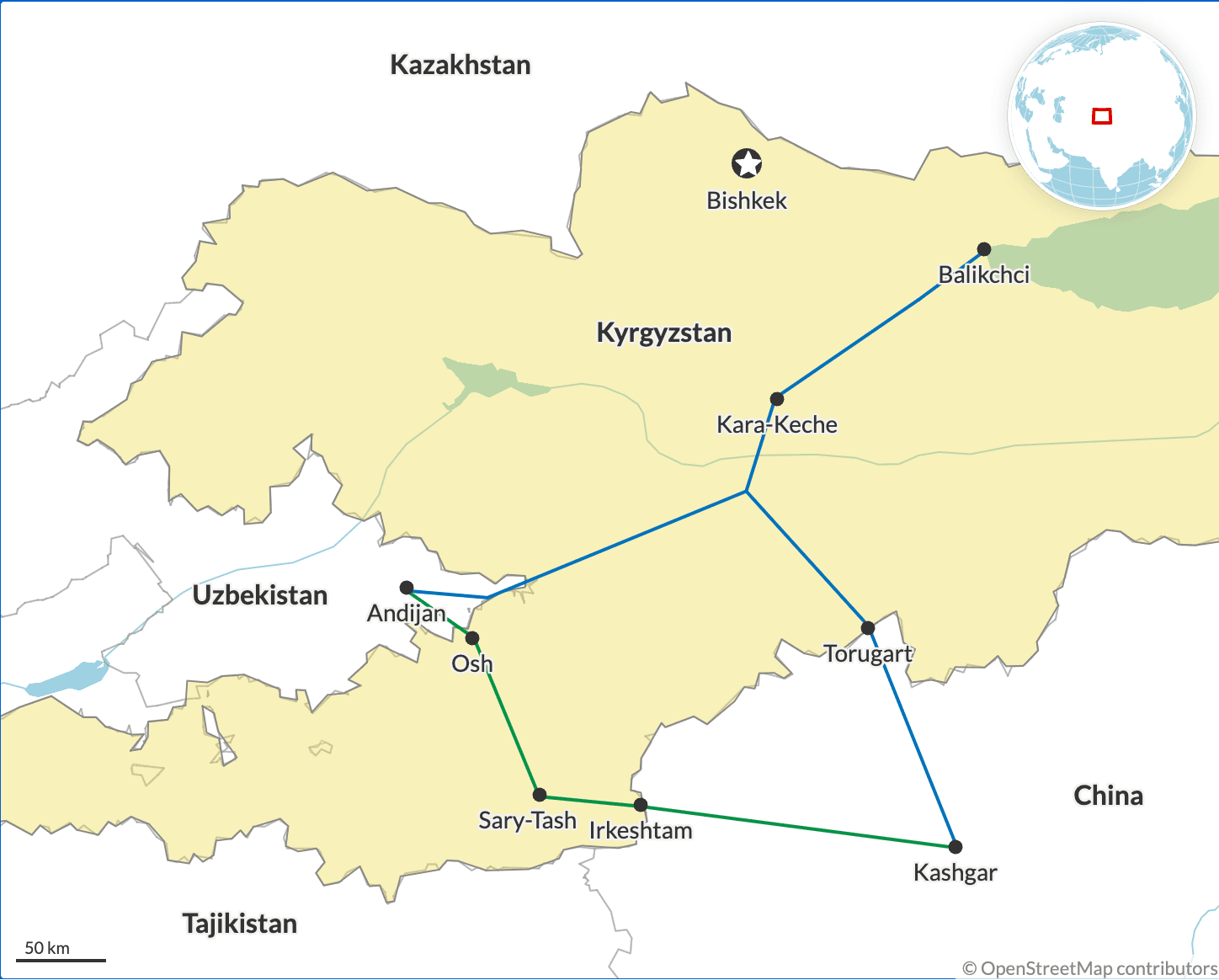
This significant increase is built on multiple initiatives and successes of the last five years. Expanding eastern transport options, construction of the 533-kilometre China-Kyrgyzstan-Uzbekistan railway began in December 2024, laying the groundwork for enhancing and increasing the competitiveness of the southern branch of the Trans-Caspian International Transport Route, otherwise known as the Middle Corridor. This project built off the success and practical cooperation fostered when the Central Asia-South Caucasus-Anatolia+ (CASCA+) transport corridor was created in 2019, when Uzbekistan joined with Kyrgyzstan, Turkmenistan, Azerbaijan and Georgia. CASCA+ aims to develop container shipping among the participating countries, eventually transiting goods to Europe. In conjunction with laying rail beds, a mechanism for regular meetings of the heads of the five countries’ railway administrations was established to solve problems and to facilitate freight transit speed. Türkiye joined this platform in 2021.
Rail efficiency has become a mantra for the region’s train managers. The first block train with all carriages traveling together from a single origin point to a single destination departed from Lanzhou in China in 2020, via Kyrgyzstan and Uzbekistan, to Mary Station in Turkmenistan. In addition, several trial shipments of cargo also travelled via CASCA+ from Central Asia to Georgia and Türkiye.
Construction of another railway line through Kyrgyzstan along the Torugart-Arpa-Kosh-Dobo-Makmal-Jalalabad route, planned for completion by 2030, promises to enhance the efficiency of the corridor by achieving rail monomodality and avoiding the using road or water crossings on the Central Asian section of the trade route. In addition to reducing delivery times, this new line also creates significant opportunities for Tajikistan to access global markets by cooperating closely with Uzbekistan.
More recently, in February 2026, the first container train along the China-Kyrgyzstan-Uzbekistan-Tajikistan route was launched featuring the use of preferential tariffs. Given Dushanbe’s interest in utilizing the capacity of the Middle Corridor to transport its export goods to Europe, the new logistics chain connecting Tajikistan will be linked to the Trans-Caspian route via Turkmenistan’s road network and seaport structure.
Yet another option for establishing a multimodal transport corridor connecting Tajikistan with the European market could be a route via Uzbekistan, Turkmenistan, Iran, and Tükiye. Pilot testing of the project began in January 2026, but the war in Iran and sanctions make this option more problematic for the time being. Extending the future China-Kyrgyzstan-Uzbekistan railway to the Caspian Sea, providing access to the South Caucasus and Türkiye, will strengthen Tashkent’s and Bishkek’s transit positions, forming an additional structure in the transcontinental transport architecture along the east-west axis.
The growing dynamics of trade between Central Asia and the European Union (EU), coupled with the intensification of trade and economic relations with the South Caucasus states and Türkiye, are giving the CASCA+ initiative new meaning. To coordinate its own future development, the Eurasian Transport Route International Association (ETRIA), comprising Azerbaijan, Kyrgyzstan, Tajikistan and Uzbekistan, was established in 2024.
In 2026, the heads of the railways of Azerbaijan, Turkmenistan, Uzbekistan and Georgia met in Ashgabat to establish a quadripartite joint venture to act as a single operator for freight transport on the CASCA+ corridor. The meeting also discussed measures to increase freight traffic, digitalize the transport process, simplify data exchange, and introduce what are known as through tariffs, all of which will enhance the commercial attractiveness of the trade route.
Uzbekistan’s transport logistics policy has contributed to a number of national development priorities, such as doubling the volume of international freight traffic and logistics product exports. Tashkent also seeks to increase annual transit to 22 million tons by 2030 and further strengthen regional connectivity. By promoting large-scale transport initiatives in partnership with neighboring states, Tashkent is working to shape a new reality for the geopolitics of Central Asia’s transport corridors.
Practical steps are being taken to enable each of the five Central Asian republics to participate in trans-Caspian transport routes in order to enhance their strategic importance. Alternative trade routes along the Middle Corridor are helping shield the region from supply chain disruptions due to global geopolitical upheavals to the north and south.
________________
AUTHOR’S BIO: Nargiza Umarova is a Head of the Center for Strategic Connectivity at the Institute for Advanced International Studies (IAIS), University of World Economy and Diplomacy (UWED) and an analyst at the Non-governmental Research Institution, ‘Knowledge Caravan’, Tashkent, Uzbekistan.
Her research activities focus on developments in Central Asia, trends in regional integration and the influence of great powers on this process. She also explores Uzbekistan’s current policy on the creation and development of international transport corridors.
She can be contacted at nargiza.umarova@iais.uz.